If a Baby Bird Falls Out of the Nest, Should You Try to Raise It
Primping & Preening
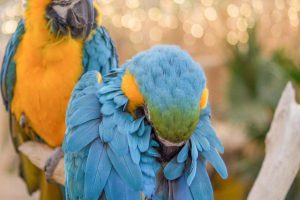 Preening is how birds keep their feathers looking clean, waterproofed and in flying condition. Healthy birds spend a slap-up bargain of preening because having cracking feathers is very important to a bird's survival. Feathers keep the bird insulated, weatherproofed, and they even aid a bird detect a mate.
A preening bird looks like he is "bothering" his feathers with its beak. What he's really doing is removing droppings and breaking upward powder-downward feathers, which abound close to the skin, into pulverisation that helps waterproof the feathers. With the exception of Amazon parrots and hyacinth macaws, the bird is also spreading "preen gland" oil through the feathers, which helps with waterproofing and acts as a precursor to vitamin-D production. While preening the bird "zips" up his feathers; each strand of each plume is like a lilliputian bit of Velcro that sticks to the others to form a tight, neat plume. Encounter, at that place'southward a lot going on with this preening business!
Birds similar to preen later a bathroom and later meals. You lot volition notice the bird milkshake out his feathers later preening and may meet a cloud of grit emanating from the bird. This is part debris and part powder downwards. Some birds, like African greys, cockatoos and cockatiels, have a lot of powder down. Regular bathing can reduce the amount of powder down your bird generates.
Paired birds and those in a family flock will preen 1 another; this is chosen allopreening, which not merely helps keep the birds tidy, but reinforces their bonds. A bird that isn't preening might exist sick or extremely uncomfortable in his living state of affairs. A tattered and ratty-looking bird that has stopped preening needs to see a veterinarian right away.
Bird Body Language
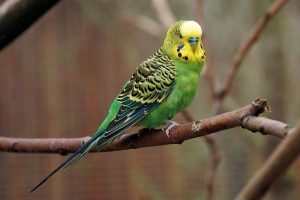 Bird novices are sometimes quick to misjudge their bird's behavior and wonder why they received a bite or why the bird fluttered off their manus. Does the bird want yous to come to it, or motility away? If you commencement to empathize what bird trunk language ways, it's like shooting fish in a barrel to read bird beliefs. Here are just a few things to scout for:
- Middle Pinning In parrots with calorie-free-colored eyes, y'all might notice the student dilating in and out when the bird becomes excited. This happens a lot in Amazon parrots, macaws, Poicephalus and African greys, but can happen in any parrot. Eye pinning means a heightened excited state — this isn't a expert time to stick your finger into your parrot'southward face — yous might simply get a nasty bite.
- Tail Flaring Birds milkshake their tail feathers after preening or to release tension, but tail feather flaring is different; this is when the tail feathers are flared out like a fan. Amazon parrots are decumbent to this, but other types of parrots practise this also. This indicates an excited state, and often appears with centre pinning.
- Beak ClickingThe clicking of the beak can point an excited state, but can likewise be a alarm to stay abroad.
- Feather Fluffing A bird will ruffle and fluff his feathers afterward preening to remove debris and will besides fluff his feathers when information technology is cold. If a bird has his feathers continually fluffed, the bird may be ill and is trying to continue warm.
- Nib Wiping Birds volition ofttimes wipe their beaks on perches or the cage confined later on eating to remove debris, such equally nutrient.
- Crest Position Some birds, like cockatiels, cockatoos and hawk-headed parrots, take crest feathers that the bird raises or lowers to indicate emotional land. If you have ane of these types of birds, watch to see what prompts the bird to raise its crest; is it excited, fearful or happy?
- Shivering Birds shiver and shake after taking a bathroom; their chest muscles involuntarily contract and expand to create body oestrus. A bird may also appear to shiver when he is very excited. Quaker parrots are known to "quake," which is how they got their proper noun.
- Flapping Wings Birds often hold on tight to the perch and flap their wings madly equally if wanting to take off in flight. They do this for practice and when they're happy, and it can also exist role of breeding beliefs.
- Head Bobbing Head bobbing can indicate that a bird is anxious to go somewhere, or perhaps he is regurgitating to yous in an attempt to bail with yous. Very young parrots bob their heads a lot, as practice quaker parrots.
- Head Shaking African grayness parrots shake their heads a lot, as if something is in their ears. Information technology is non sure why they do this, only it'southward a normal behavior for this species.
Normal Parrot Beliefs
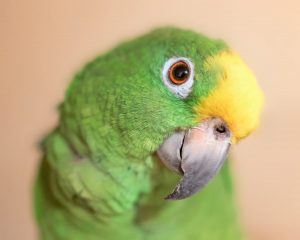 In that location are some parrot behaviors that are admittedly mystifying to people new to birds, but that are actually quite normal. Here's a rundown of the Pinnacle 10 behaviors that people frequently inquire nearly:
- Beak Grinding Many salubrious birds grind the nib but before globe-trotting off to sleep. This is a normal behavior, and though information technology's not certain why they practise this, it is definitely a sign of beingness content and comfy.
- Preening Birds preen continually throughout the day to go along their feathers clean and neat. Preening is never a problem until it becomes "over preening" and you notice that your bird is actually chewing or plucking out feathers.
- Regurgitating Regurgitating is when an adult bird brings up partially digested food to feed a mate or chicks. Birds that are closely bonded to their humans volition also regurgitate to their owner — a very sweetness gesture, only quite unnecessary! If you want it to cease, you can give thanks the bird and then just casually walk away. Regurgitation is different from vomiting; a bird that'south vomiting is ill, and the vomit will likely stick to the feathers around the face up and breast — this bird needs medical attending.
- Playing Yes, birds really play just like kids! Non all of their behavior is a function of biology. Birds are intelligent creatures that will expect for something to exercise rather than merely sit around in a cage, and then it'due south important to have enough of toys available.
- Cat Napping Birds take catnaps throughout the day, which is completely normal, especially if the bird naps on a perch while continuing on ane leg. If the bird is standing on two legs with its feathers fluffed, he is either cold or perchance ill.
- Freezing In Identify A bird that is afraid might freeze in place, non moving even a plume in hopes that he won't exist seen. This is because many predators' eyes merely pick upwardly movement, then they have a difficult fourth dimension distinguishing inanimate objects.
- HidingA bird that doesn't want to exist put back into the cage might hide at the back of the cage (on the outside) or find somewhere else to hide — who said that bird brains aren't smart?
- AssailmentYeah, sometimes aggression is normal behavior. Some birds get hormonal in the spring and may try to protect their cage. Others may non like a certain mode of being handled, or are perhaps interim out of jealousy. Whatever the instance, aggression always has a cause and can be quelled once the crusade is discovered and handled appropriately.
- Egg LayingFemale birds (hens) tin can lay eggs with or without a mate present. This is normal behavior, and should only be stopped if the lone hen lays as well many eggs and spends also much time tending to eggs that volition never hatch. You can preclude hormonal triggers past decreasing the amount of light your bird receives to less than 12 hours a day and removing any perceived nest sites.
- Begging Some birds revert to "baby" begging behavior to get what they want, especially if information technology has worked in the past. This includes getting into a crouched position, scrunching the wings upwardly, bobbing the head and making chick noises. You can limit this beliefs by not indulging it, even though it tin can be kind of beautiful, at first!
Normal Vocalizations
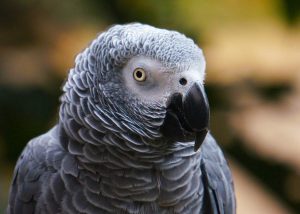 There'due south no such thing as a repose bird. Some are quieter than others, usually because of size — the bigger the bird, the louder the volume. Still, what minor birds lack in volume, many make upwardly for in persistence. For some people, the intermittent squawking of a macaw is more acceptable than the persistent low cooing of doves. In any instance, there's no way to become a bird to exist completely placidity, or to be quiet when you lot want. Making dissonance is instinctual for birdsl, it is how they communicate, form bonds and defend themselves. Here are some forms of normal birdie communication:
- Chattering Small-scale birds chatter throughout the day for various reasons. Almost birds are the most vocal at dawn and dusk, when they're getting set up to feed. Some small birds will even churr in their sleep during the day, a protective adaptation to bear witness predators that they are awake and alert, not catnapping and vulnerable.
- Screaming Some parrots scream and screech, which is normal to a caste. Parrots that scream the loudest are those that tend to mingle in mixed groups, like many of the Due south American species. They have to be loud to be heard over the din of so many voices. Species that tend to stick together in a unmarried-species flock are frequently quieter — not necessarily less persistent, only slightly lower in volume. These include many of the African species.
- Contact Calling You may observe that your bird seems to "call" yous persistently and won't quiet downwards until y'all enter the room. In the wild, this is called "contact calling." Birds like to know where their partners are, so they call loudly expecting that the other will recall. This helps partners locate each other and affirms that both are safety. Your bird may want to participate in "contact calling" with you lot. Information technology'south really like shooting fish in a barrel — if yous sense that your bird is calling you, either past screaming or whistling, simply think that you're okay. You lot tin brand a game of it. This helps the bird experience secure and will usually quiet him down after a few calls — well, depending on the bird!
- Talking & Whistling Many parrots can larn to mimic human spoken communication, and some can even learn to sympathise what they are saying and apply words in context. You can't really "teach" your bird to talk; either it will or it won't. The best you tin do is talk to the bird a lot and echo specific words and phrases that y'all'd like him to larn. Birds are confounding sometimes; it'southward likely your bird will learn something you didn't want him to! If your bird doesn't learn to talk, it doesn't mean that he isn't smart; perchance he is non of a species that can larn to talk. Also, the females of some species are less likely to speak than males.
- Hissing & Growling Cockatiels and African greys are known for hissing and growling when they feel threatened. If a bird hisses and growls at you, back off. This means that the bird feels cornered and may lash out to protect himself.
Dealing With Biting
People will tell yous that birds don't bite in the wild. Well, they don't usually bitesuccessfully in the wild, simply they will snap at each other if it becomes necessary, for example, if one bird invades another'southward nest or territory. Birds do bite a lot more than in captivity, usually because their boundaries are being pushed too far. All birds take a threshold of what they can handle before they lash out with a seize with teeth. There are other expert reasons for a bird to bite likewise. Here are some details about birds that seize with teeth:
- Rule #1 The first dominion in teaching a bird not to bite is not to get bitten. When a bird bites, he commonly gets what he wants from the action — you will go away and leave him lone. You will besides make a big fuss over the bite, which tin can be attractive to the bird, an animate being that loves drama. Rather than reinforce the behavior, just don't allow it happen. Larn to "read" your bird so that you lot can appraise the situation and go out before the bite happens.
- Fear BitingYou can hardly blame a bird that bites out of fear, fifty-fifty if the fearfulness is unfounded. Await at the earth from your bird's perspective and endeavor non to put him in situations that will frighten him.
- Hormonal Biting In the spring when the days get longer, some birds are prompted into breeding mode and may become territorial of their housing area, of another bird, or of a person in the household. This can usually be dealt with by adjusting the corporeality of light the bird gets a day to less than 12 hours.
- Jealousy BitingSometimes, a bird volition love his person so much, and and then of a sudden chomp down on him or her when someone else comes into the room. This actually has practical application in nature, although information technology is unpleasant. In the wild, a member of a pair will shoo abroad their honey when another bird, a threat to the pair, flies into the territory. The "jealous" bird is simply protecting their mate and their relationship. If y'all know that your bird does this, make sure that you lot tin put him down earlier someone comes into the room, and don't e'er allow this bird to ride on your shoulder.
- MoltingSome birds become irritable when they are molting and may not be feeling 100 pct. The same goes for birds that are sick or injured.
- Counteractive Biting Some birds bite to forestall you from performing or not performing an action, for example a bird that bites when existence brought back to the cage because he doesn't desire to be locked in. As an aside, some birds that don't like to be put back into the cage pretend that they have wobbly legs and that they can't stand up up simply as you put them away — what a great tactic for not stepping onto a perch! To prevent "put away" biting, don't put your bird away every time you pick him up. Instead, do something fun, or play a niggling game before y'all put your bird away; mix it upwardly so that the bird isn't certain what's coming next, and get in fun!
Dealing With Screaming
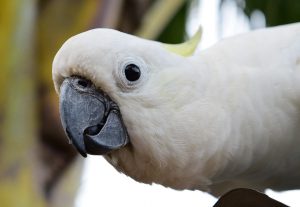 Screaming birds are a big result with bird owners, who oft don't know what they're getting themselves into when they bring a bird habitation. Some screaming (or voice) is normal — it becomes a trouble when it is persistent and drives you lot crazy, and mayhap your neighbors a little nuts. Loud birds like these oft get re-homed over and once more because no one tin stand the noise. It's unfortunate that one time a blueprint of screaming is developed, it is very hard to interruption, only not impossible. Y'all just have to take realistic expectations about how much book you can pass up. You also take to allow your bird some screaming time when it would be normal for him to scream, such as in the morning and at dusk. Beyond that, yous tin can try to break the screaming blueprint in a variety of ways. Here are some tips:
- Try To Figure Out Why The Bird Is Screaming. Is the bird lonely because he is not getting enough attending? There may be a elementary explanation for the noise. If the bird is lonely, give him more attention! Just be sure to requite him attending only when he is being placidity. This way you don't reinforce the noise.
- Has The Bird Learned That You Will Come up Running When It Screams? Many birds come to realize pretty quickly that screaming gets their person'southward attention. Many people run to a screaming bird to shut him up, particularly when the balance of the family is protesting the loud mouth's presence in the business firm. Rather than be at your bird's beck and phone call, notice quiet moments and give your bird attending then, rather than when he is screaming.
- Has The Bird Learned That Yous Will Lose Your Temper When It Screams? Birds love when their people lose their tempers; and then they scream back! How much fun! Try to remain at-home and mellow, and just walk abroad from a screaming bird and give yourself a timeout.
- Lower The Dissonance In The House.Is the bird competing with other household noise? Is the Boob tube and the radio on, are the kids screaming, and are the dogs barking — all at the same time? If so, your bird is merely trying to be heard above it all. Turn down the volume in the house.
- Is The Bird Screaming For A Mate? A bird that starts screaming in the springtime might be calling for a mate. This should subside in the fall. In the meantime, give the bird some attention, especially when he is quiet.
- Comprehend The Bird.Roofing the bird is a "quick gear up" for screaming. Yep, information technology will cease the screaming for the fourth dimension being, merely it will not prevent future screaming, nor volition it teach the bird non to scream. Birds are instinctively quiet at night, when almost of their predators are prowling and they are most vulnerable. It is not appropriate to cover a bird for long periods during the twenty-four hour period, then consider this if you're regularly using this tactic.
Dealing With Plucking
A bird that is plucking or chewing his feathers has any number of bug that need to exist addressed before the beliefs can change. Plucking often has a precipitating incident that causes the behavior, but it tin too stem from medical causes. In some birds, the plucking becomes an entrenched habit that is difficult, even impossible to alter, simply information technology is possible to change the beliefs once you find the cause.
Beginning, you take to get to the root of the plucking, which isn't always possible. The very starting time affair that a plucking or chewing bird needs is a consummate medical evaluation. The bird may have a skin trouble or infection that is causing the beliefs. Besides, where the bird is plucking is of import. Birds with respiratory infections tend to pluck effectually the breast, and birds with leg or pes bug pluck in that area.
If your bird comes back with a clean bill of health, then information technology is fourth dimension to showtime looking for environmental causes. Is the air very dry in your surface area? Perhaps the bird needs more baths to keep the skin moist?
Has in that location been a change in environment? Have you moved the bird, or have yous moved something "scary" or disturbing into the bird's immediate surface area? Birds have been known to start plucking over simple things like the presence of balloons, a new computer monitor or new artwork. Accept you painted recently or put downwards new rug? Both contribute to poor air quality, which tin can precipitate plucking. Has the bird recently lost a mate or a birdie friend? Has someone moved into the household whom the bird doesn't like?
Poor nutrition can also crusade plucking beliefs. Diet contributes to a bird's overall health, and when his health is compromised, so is his behavior. Information technology is thought that plucking birds may need a poly peptide and vitamin boost, which may terminate the behavior. Nutri-Berries and Avi-Cakes are two counterbalanced diet foods that also encourage foraging for expert mental wellness.
Is the bird bored? Peradventure the plucking or chewing behavior is simply an endeavour to find something to do. A plucking bird should be offered a lot of toys, peculiarly preening and soft-rope toys; ideally, the bird will turn the over-preening behavior onto his toys. Likewise, foods that encourage foraging minimize boredom.
Is the bird hormonal? A frustrated bird may turn to plucking behavior to relieve a little chip of his free energy. The bird may also be frustrated that he doesn't have a mate or some other bird to preen with.
Has your routine changed? Is the bird getting enough attention? Is he getting plenty slumber? Remember, birds are creatures of habit, and they like routine. Sometimes the improver of an infant or a new pet to a home causes plucking, considering the bird is no longer the center of attention.
If you lot have a plucking bird, effort every remedy possible — nutritional, environmental, behavioral — something may piece of work. There has been a lot of success with irresolute this behavior simply past offer the plucking bird more than nutritional foods and supplementing the diet with advisable vitamins and minerals.
Ane-Person Birds
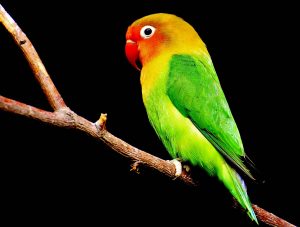 In that location's a phenomenon among captive parrots ofttimes chosen the "one-person bird." These birds closely bond to one person in the household and may shun the residue, even condign aggressive to anyone who isn't "their" person. This is actually quite normal behavior, though it can be heartbreaking to the people whom the bird shuns, peculiarly if the bird was supposed to be a sure person'due south bird; for example, a married woman brings a bird dwelling to exist her companion, merely the feathered traitor likes the husband instead.
To make things fifty-fifty more than confusing, alliances can even change over the years. A bird that is closely bonded to the hubby may suddenly determine that he prefers the wife. Birds tin even shun a beloved owner for a houseguest! At that place's no telling what's in those birdie brains.
One theory is that birds are genetically predisposed to eventually move away from family unit members to discover birds that don't share their genes. Then, if a bird is mitt-fed by a woman or bonds to a woman as a youngster, it is possible that the bird will grow up to prefer men.
You tin can't cull which person in the household that your bird is going to adopt, but you can effort to prevent this beliefs in a very young bird past having lots of different types of people handle the bird, and have all family members offering the bird equal attention. The adept news is that not every bird is predestined to become a "1-person bird." Some birds are naturally friendly to just nearly everyone.
Your Bird's Hormones & How They Touch Behavior
Mature birds tend to get hormonal once a twelvemonth in the spring, when the amount of natural low-cal is longer than the amount of darkness. Birds are "photosensitive," meaning that are sensitive to light and its cycles. Some birds don't show much modify when the spring comes, and others may get sullen, aggressive, unusually loud and territorial. Some may lay eggs fifty-fifty if in that location is no mate effectually, and some will set out to create a nest out of whatever it can find.
When your bird is behaving hormonally, it's important not to handle the bird in a way that tin be misconstrued as mating beliefs. This includes petting down along the dorsum and encouraging regurgitation behavior.
If your bird is in a hormonal phase, remove annihilation that tin exist viewed equally a nest, including all huts and boxes. Don't encourage nest building. If you exercise, the only thing you'll accept on your hands is an aggressive bird that is intent on defending its nest.
If the hormonal behavior is out of hand, e.1000., your bird won't allow you near his cage and/or bites you savagely, you can try to temper its hormones by limiting the corporeality of low-cal he gets per day to less than 12 hours. Ten hours of light per day should assist the hormones subside. In any case, in one case fall comes and the clocks alter, your bird'south hormonal beliefs should begin to dissipate naturally.
Sudden Fearful Behavior
Sudden fear is an unusual and baffling behavior that startles and concerns bird owners, particularly since it seems to come from nowhere, literally overnight. The once gentle or gregarious parrot is now intensely fearful of his people, of beingness handled, or of being taken to a place where he has been hundreds of times.
At that place is no good explanation for this behavior, so the first thing you have to dominion out is a medical status. The bird may accept injured himself or is having pain and volition do anything to avoid being handled.
Sometimes the onset of fearful behavior comes when the bird reaches sexual maturity. The bird may view the world and its inhabitants differently now, and may become agape of familiar things.
Don't take this behavior personally. The bird is reacting to some stimuli that probably has trivial to practice with you lot. Don't make a fuss and become angry, and don't coddle the bird either. Nigh of the time this behavior will work itself out. If it doesn't, consult a bird behaviorist after you lot've consulted your avian veterinarian.
Nighttime Frights
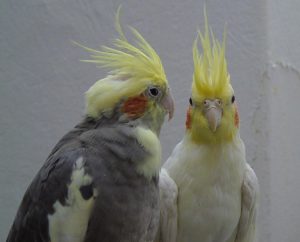 Night frights happen when something scares a bird in the darkness, and he thrashes around the cage. This oft happens to cockatiels, but it can happen to any kind of bird. Night frights are dangerous because a bird thrashing around a muzzle tin can severely injure itself. Most vulnerable are the eyes, claret feathers, feet and neb.
If your bird has night frights, starting time try to determine the cause. Perhaps it is likewise nighttime in the bird's room. If so, plug in a nightlight to come across if that helps. Perchance the room is too lite, and the bird can see shadows or other pets moving around? In this example, cover the bird to run across if the thrashing stops.
Is the room where your bird sleeps peaceful, or are there interruptions and noise in the night? Someone getting up for a midnight snack is enough to prompt night frights, every bit are the glare of headlights through a window. A bird at dark is very vulnerable, so information technology's natural that the bird would be on the lookout for danger.
If you've tried a few remedies and the thrashing continues, consider getting the bird a smaller muzzle to sleep in at dark, which you can keep in a quiet back room. Put just a couple of perches and food and water dishes in the cage, and line it with towels at the beginning.
Entertaining Your Bird
Birds are thinking and feeling beings
Some people bring birds into their homes to act as entertaining companions, only it before long dawns on about people that it is non the bird that's doing most of the entertaining, nor is "entertainment" the reason to accept a bird in the first place. Birds are thinking, feeling beings, and are incredibly sensitive to their surround and the other beings in information technology. They tin can feel "vibes" and pick upwardly mood changes. They effort to "fit in" with the other members of the household as best they tin can.
Some people think of their birds every bit feathered kids, and though it'southward endearing to have the aforementioned feelings for a bird every bit you would a child, you are better off viewing your bird as an equal and as an adult. There are a lot of things you can do with a baby bird that an adult bird may not like. Birds mature quickly and will want to be treated with respect, so allow your bird to mature and develop a relationship with yous on his ain terms.
When y'all live with a bird, you have to put the needs of the bird first, and brand sure that he has everything he needs to thrive. Birds can be physically fragile, but they are too emotionally delicate too. Birds are incredibly adaptable, just they don't flourish when they are being ignored or treated poorly. Take some time each twenty-four hours to spend with your bird, and reassure him that your relationship is going stiff. Remember, almost wild parrots mate for life, and near aren't on their own for very long, so your parrot is programmed to desire company and concrete attention.
How Intelligent is Your Bird?
Intelligence is defined every bit the ability to sympathize and deal with new or trying situations, the skilled use of reason, and the ability to utilise knowledge to manipulate ane'southward environment or think abstractly equally measured by objective criteria. Birds can practise all of these things. Non but has inquiry on parrots shown that they can call up abstractly and problem-solve, wild birds have been observed using tools and manipulating their surround to get food. It used to be thought that only primates had the ability to acquire complicated linguistic communication and abstruse thought, but parrots can equally well.
How intelligent your bird is depends on the species and the individual. To date, the only species that has been thoroughly researched for intelligence is the African gray parrot. Scientist Dr. Irene Pepperberg and her African greyness parrot, Alex, worked on intelligence studies until Alex passed away in the fall of 2007 at 31 years of age. Pepperberg concluded that Alex had the intelligence of a 4-twelvemonth-old child, with the emotional capacity of a 2-year-old. So, the level of intelligence isn't articulate when it comes to other species, but it tin can be assumed that some of the larger parrots have similar intelligence, and possibly even the smaller species do, too. Speak with anyone who lives with a talking parrot and yous volition hear stories of how the bird says words and phrases in context. Information technology's quite amazing, considering that parrots pick up words and phrases just by listening and observing. There's no parrot pre-school!
Playtime Outside Of The Cage
Small-scale birds like finches and canaries tin do well in big cages, but fifty-fifty the smallest of parrots appreciate existence allowed outside of the muzzle every day. Cage-bound birds tin can become very unhappy and tin can develop neurotic behaviors. This is sometimes called "cageosis." The bird will footstep along the perch and swing his caput from side to side, or bob his caput and scream. Being constantly trapped in a cage, especially i that is too small, can also lead to plucking behavior and certainly too loud phonation.
Birds are meant to fly, so information technology is unnatural for them to be caged. They are adjustable and will get used to it, but that doesn't mean that the bird should be confined to the cage at all times. Provide your bird with a play area exterior of the cage. It can be on superlative of the muzzle or a separate surface area in another room. Whatever the example, the bird should have some freedom without confined.
If your bird doesn't stay on its play expanse, move the area to another spot until the bird is comfy. If the bird is following you around, endeavour placing a play area in each room. Fill the play expanse, whether it'southward a play gym or stand, with lots of toys and shredding fabric, as well as food and water.
At that place is no time "rule" for playtime outside of the muzzle. Essentially, the more fourth dimension y'all can occupy your bird, the better his quality of life. So, don't put limits on playtime.
Handling The Bird
If your bird likes to be handled, make time each day for hands-on contact. Some birds may become distraught if they don't get enough 1-on-1 fourth dimension with their favorite human, and others tin fifty-fifty lose their companionability and may "revert" to being a bit wild.
E'er handle your bird gently and with confidence. Even if you lot've been bitten before, try not to show that you are afraid. This is a mistake that some people make, and information technology tin ruin a relationship with a bird. In one case bitten, twice shy, yes — merely remember that the bird is a feeling being and perchance the bite was warranted.
Try non to engage in crude play with your bird. This makes the bird call up that he tin can be rough right back, which tin event in a bite. Then you lot'll be angry at the bird, and he won't know what he has done wrong when playtime is abruptly stopped.
Many birds similar to be stroked around the head and neck. Some will even appreciate your help in gently removing the sheaths effectually new feathers growing in that area since the bird tin't get to them himself. Pet the bird gently confronting the "grain" of the feathers to become to the skin below, and rub the bird's cheeks in soft circles. Many birds really savor this kind of touching.
Indirect Attention & Entertainment
Birds don't demand to be handled all day, but they practise demand to be kept visitor for a good part of the day. You tin give your bird "indirect attention" but by allowing your bird to be in the room with you lot every bit you do your chores or work. Your bird will be happy spending time with y'all fifty-fifty if you are non holding him all the time.
Indirect entertainment is anything outside of the bird'south reach that keeps him occupied. For example, having a TV or radio on is a comfort for a lot of birds. A bird's environment in the wild is never quiet. In fact, stillness and serenity can exist stressful on a bird. Then, a fiddling background noise is always appropriate. Parrots as well capeesh visual stimulation. Perchance putting the bird where he can see outside the window would be entertaining.
Placing the parrot in a lively room tin also make him feel part of the action. A TV room or family unit room is ideal. People coming and going tin can talk to the bird every bit they pass and keep him entertained. A parrot sitting lone in a placidity room is a lonely parrot indeed.
Bird sitting DVDs are becoming popular now. Many of them show birds in the wild (and in captivity) interacting with each other, making noise and playing. It's not certain that birds actually sentinel the DVDs on the Idiot box, just they will at the very to the lowest degree appreciate the dissonance.
Getting The Bird A Friend (Pros & Cons)
Giving a parrot the attention and focus he requires can exist a lot to handle. Oft, getting the bird a baboon "friend" can take away some of the established bird'southward loneliness. Some people feel that birds should be with other birds, and some hormonal birds even demand information technology! The biggest pro to getting your bird a friend is that the pair will never be lone and will go on each other entertained — well, in a perfect world that would exist the example. The biggest con is that your established bird will no longer want to take such a close bond with yous.
Ideally, a new bird will get along with your established bird, simply there are a lot of things that can go wrong, too. The birds could actually despise each other. What volition you do and then? Now you have just doubled your trouble. The birds could be indifferent to each other; again, double the problem. Now you lot take to split up your fourth dimension between two birds.
It is never a proficient idea to purchase a bird for another bird unless you know that the two will bond. Remember, both birds are your responsibility, and double the birds means double the mess, noise and bills. Only buy another bird "for" your current bird if you're able to have on another companion.
Source: https://lafeber.com/pet-birds/bird-behavior/
0 Response to "If a Baby Bird Falls Out of the Nest, Should You Try to Raise It"
Post a Comment